

The F1 Grid Dashboard is a personalised, interactive application engineered to simplify how motorsport fans track the racing season. Powered by React and driven by real-world datasets, this single-page platform aggregates live championship standings, interactive calendars, and real-time weather forecasts into a highly focused visual console. This case study breaks down how complex, fragmented live data feeds and cloud databases were successfully orchestrated into a resilient, user-driven digital product—marking a milestone journey from first-time framework adoption to robust full-stack engineering.
The Ideation & UX Strategy
Formula 1 generates an immense amount of live data, but official dashboards are often tailored for deep technical analysis and complex telemetry. For the casual or lifestyle fan, keeping up with the season shouldn't feel like auditing a spreadsheet.
The strategy behind this project was to filter out the noise and prioritise accessibility, personalisation, and interactive engagement. By focusing on what a fan cares about most—such as tracking a favourite driver’s standing or planning a race weekend—the dashboard replaces cold numbers with an intentional, human-centric drop-in portal.
The Functional Experience
To move past static tracking, the interface is split into cohesive operational zones tailored to real-world fan behaviours:
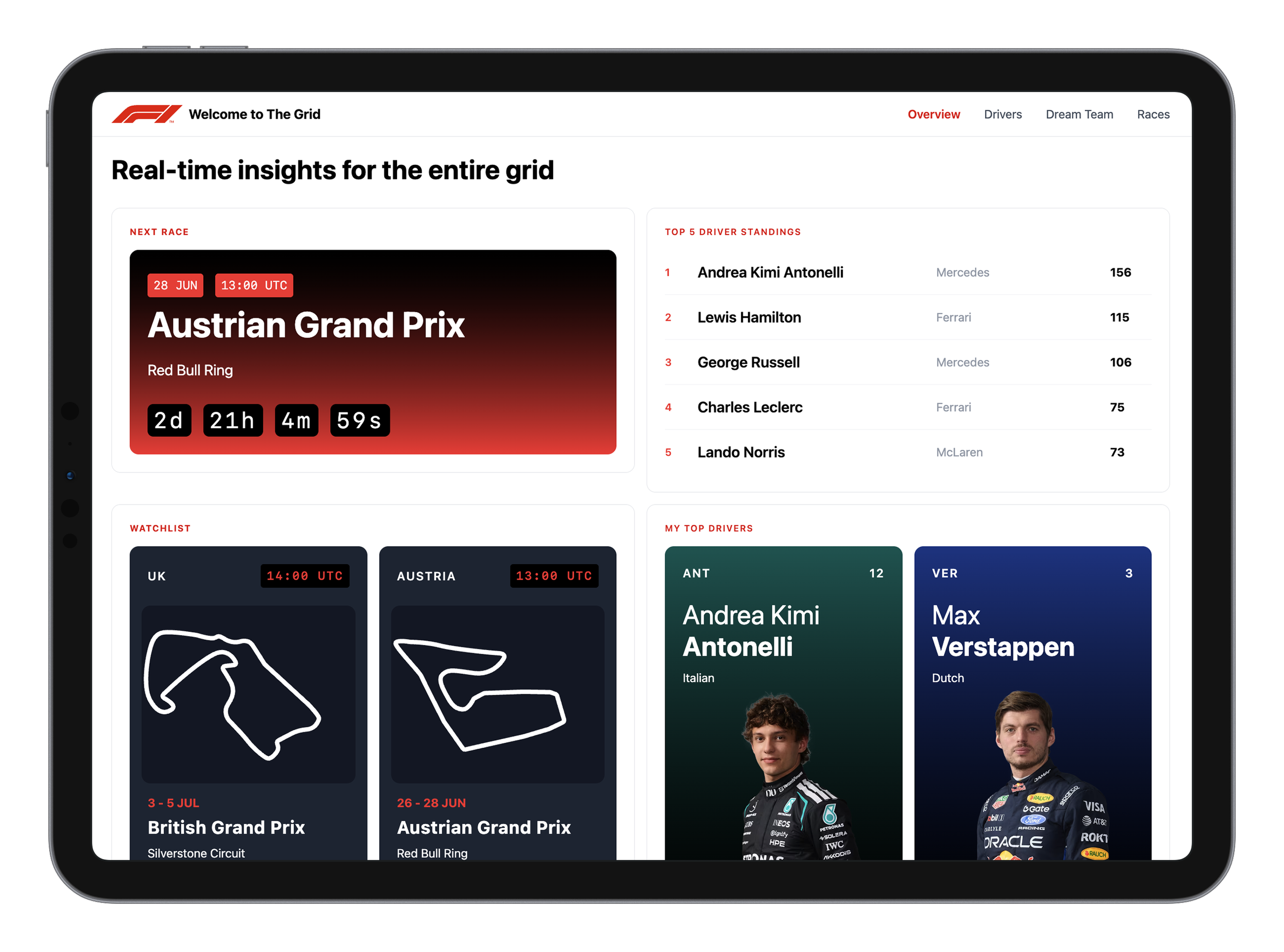
The Live Overview: The interface entry point features an active, real-time countdown timer to the next race weekend, localised weather forecasts for the destination circuit, and a snapshot of the top championship contenders.
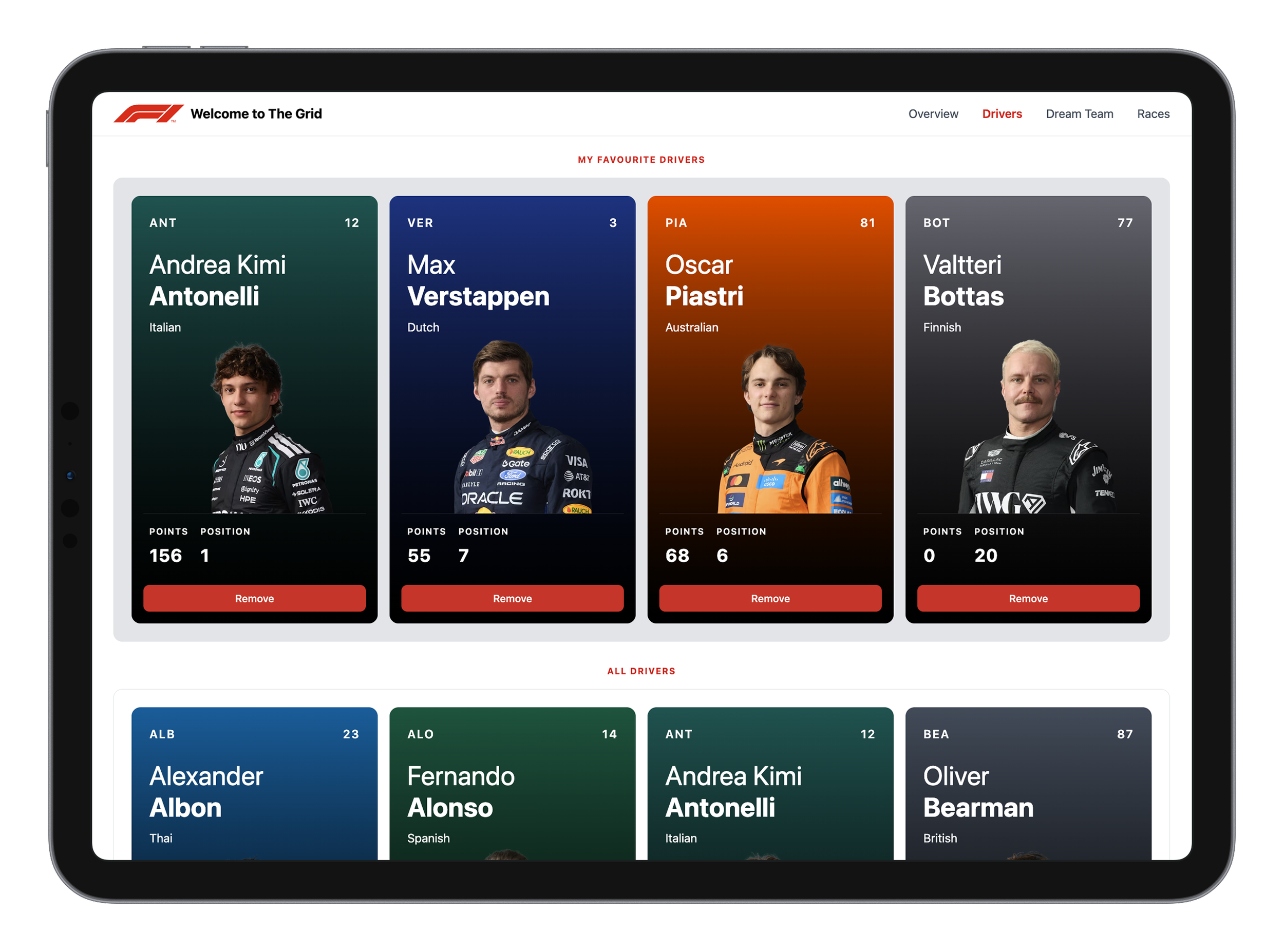
Dynamic Driver Directory: A complete grid view where users can browse athletes. To maximise personalisation, a favourite driver feature allows fans to pin chosen drivers to the top of their screen, automatically syncing their live points and championship positions to the home panel.
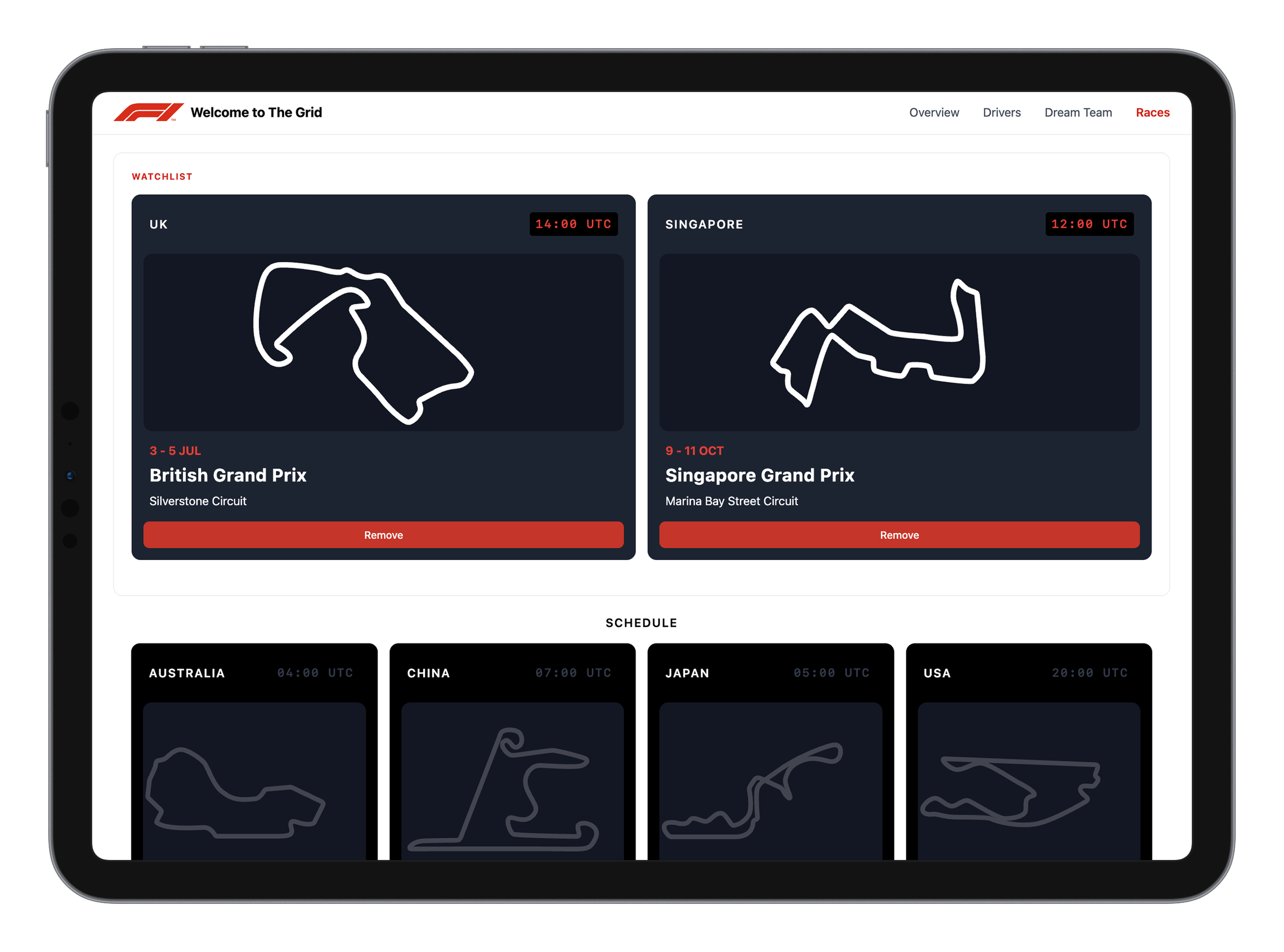
Smart Race Calendar: Moving away from plain text schedules, the calendar presents visually distinct cards featuring circuit maps. Past races are automatically greyed out, while upcoming rounds feature a toggle to dynamically add events to a personal watchlist.
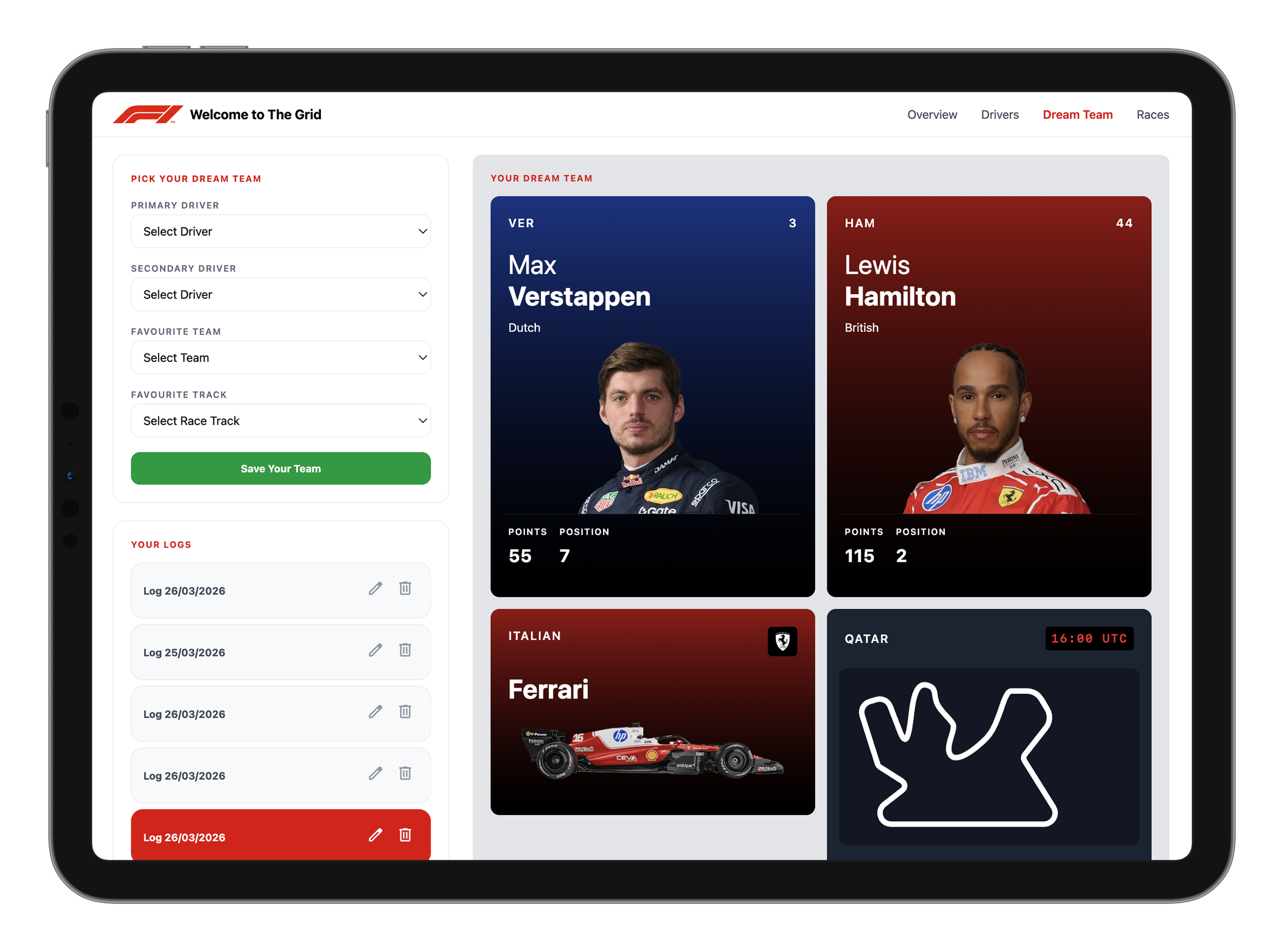
The Dream Team Builder: An interactive space where fans build an ideal F1 lineup by selecting primary and secondary drivers, their favourite car constructor, and a preferred track. As choices are adjusted, a live visual preview updates instantly before saving the selection to a personal log.
Deep Dive: The Engineering Journey
The Service Layer Architecture
As a first-time React application handling live data networks, maintaining an organised system required a strict "Separation of Concerns" strategy. Instead of allowing user interface components to request data directly from the network, a dedicated backend Service Layer was built. This layer houses separate channels for motorsport standings, weather metrics, and cloud storage requests. By wrapping asynchronous transactions in strict validation checks, data was thoroughly inspected and verified in isolation before the visual components were ever painted on the screen.
An early engineering hurdle involved managing how personal preferences persisted when a user reloaded the browser.
The "Reload Bug": Initially, personal selections were stored in a cloud database as simple identity strings, while detailed driver text and branding parameters lived in the motorsport API. Fetching these sources sequentially created a slow "waterfall" lag. On a fast page refresh, the user interface would briefly display incomplete cards or crash because the two networks were out of sync.
The Parallel Powerhouse: To resolve this, a synchronised parallel loading pattern was implemented. The system triggers both requests simultaneously, forcing the application to wait until all data pieces are fully resolved before moving forward.
The Data "Zip" Pattern: Once both networks respond, a matching script walks through the collections and "zips" them together—taking the raw identity strings from the database and hydrating them with names, numbers, nationalities, and live points from the motorsport API, ensuring the interface renders flawlessly on the very first frame.
Transitioning from Prop Drilling to the Context API
As the application grew, passing user favourites from the root level down through three intermediate layers of separate pages became structurally messy and difficult to maintain.
The Learning Curve: Transitioning to a centralised global state engine introduced initial challenges, including system crashes caused by circular dependencies and uninitialized data channels.
The Structural Fix: Through rigorous debugging, the data architecture was refactored so that a master provider wraps the entire application tree at its highest root. By exposing this global data through clean, custom interaction hooks, any standalone card or menu item across the site can instantly read or update global states without needing manual prop-passing chains.
Interface Interruption Safety Handling
Inside the Dream Team dashboard log, users interact with dense rows of interactive data. Clicking a log entry opens a driver’s full history profile, but clicking the "Edit" or "Delete" buttons nested inside that same row would accidentally fire both triggers simultaneously. To establish proper visual safety, explicit event propagation overrides were written into the action buttons, instantly stopping the interaction from "bubbling up" the layout tree and ensuring nested actions remain isolated.
Defensive Quality Assurance
Live sports APIs are inherently unpredictable; data may be delayed, records might be missing, or network requests can time out. To guarantee absolute framework stability, a defensive programming layer was engineered throughout the codebase:
Structural Graceful Fallbacks: To protect the app from crashing during loading states, optional chaining syntax and nullish coalescing operators were paired together. If the motorsport database hasn't fully loaded an athlete's metrics yet, the application intercepts the uninitialized value and displays a clean visual dash (—) instead of throwing an unhandled system error.
Asynchronous Asset Protection: In the event that a circuit map image or a driver portrait fails to load from the hosting server, image-error event listeners automatically catch the failure and substitute a beautifully branded fallback placeholder asset, keeping the layout unbroken.
State Batching Guardrails: For critical responsive elements—like the rapid opening and closing of navigation menus—functional updaters were implemented. Instead of reading local snapshots, which could become stale during fast consecutive clicks, the toggles tap directly into the absolute latest operational state of the framework.
Future Roadmap
With the fundamental navigation, database linking, and global state tracking working seamlessly, the development roadmap focuses on rolling out premium technical expansions:
Deep Live Telemetry: Integrating advanced telemetry networks to feed real-time car details, active lap tracking, session histories, and live timing intervals onto the overview board.
External Calendar Synchronisation: Engineering automated date aggregation features to allow fans to sync upcoming race weekend schedules directly to Google or Apple calendars with a single click.
Automated Search & Filtering: Developing instant-search bars and filter dropdowns to navigate the driver lists by name, engine manufacturer, or constructor instantly as the grid expands.
Expanded Historical Logs: Creating a dedicated Hall of Fame portal to allow fans to explore past championship seasons, constructor histories, and legendary driver profiles.