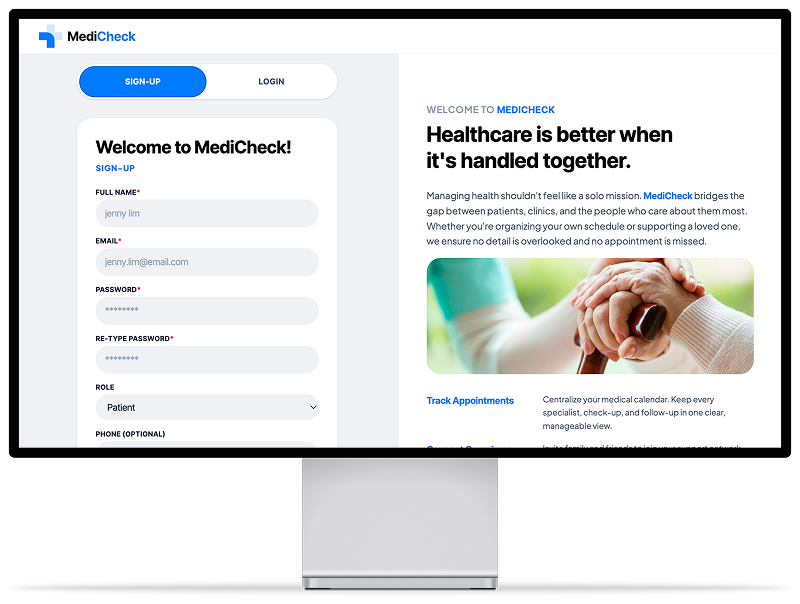
MediCheck is a multi-user digital coordination platform built to bridge the gap between patient care and caregiver visibility. Developed as a robust full-stack web application, it transforms the isolated, stressful experience of managing medical schedules into a shared, secure loop of support. This case study reveals how human-centric design thinking and defensive engineering architecture were used to solve real-world healthcare vulnerabilities.
The Ideation & UX Strategy
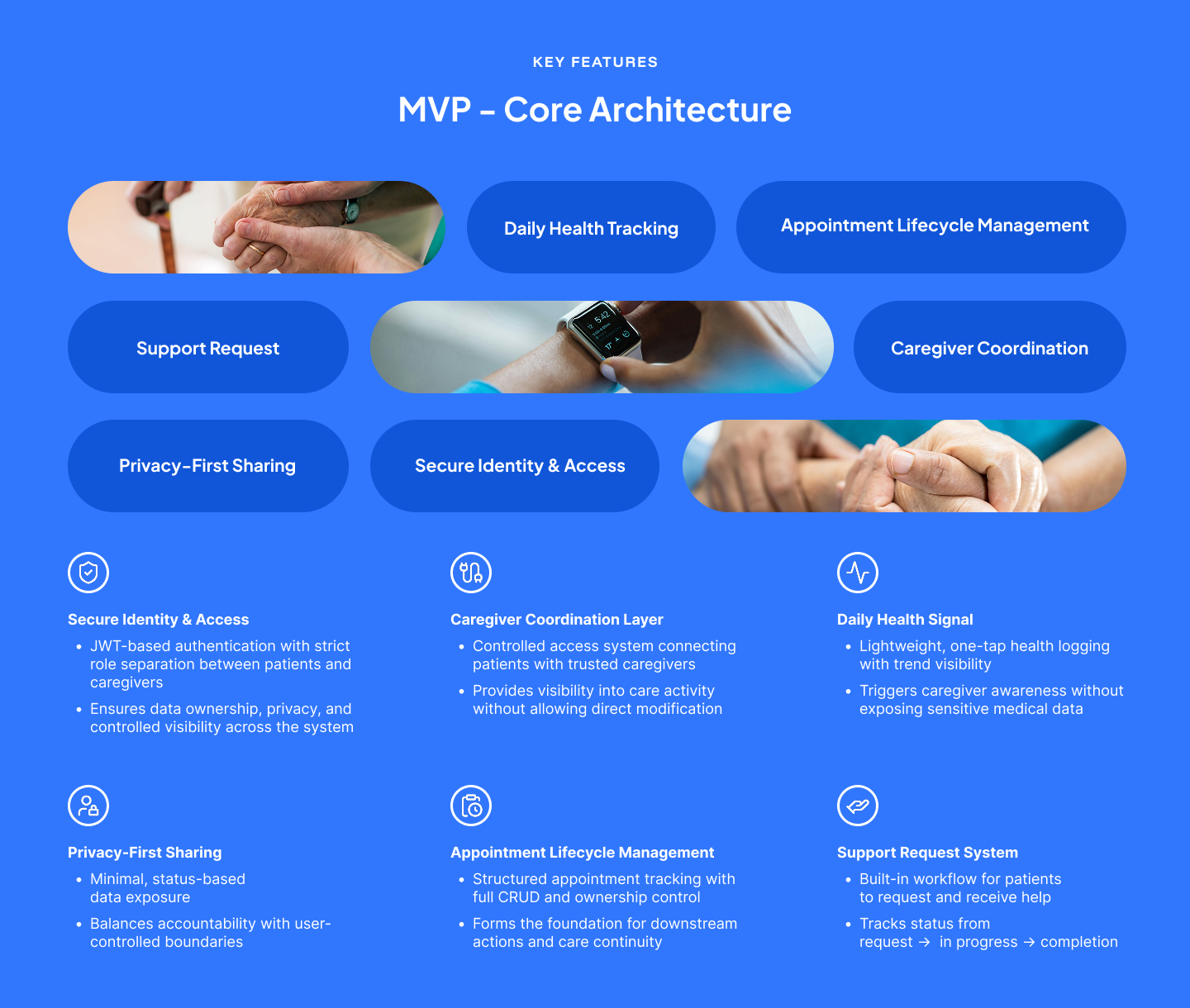
The strategic foundation of MediCheck began with a critical insight: healthcare doesn’t end when a doctor hands you a prescription, but for patients living alone or managing chronic conditions, that is exactly where the system breaks down. Existing medical applications rely on passive notifications that are easily swiped away and ignored. They fail to track whether an appointment actually happened, creating immense cognitive overload for vulnerable users. MediCheck was conceived to shift digital care from a single transaction into a continuous, accountable cycle, giving families and networks peace of mind without compromising patient autonomy.
The Functional Experience
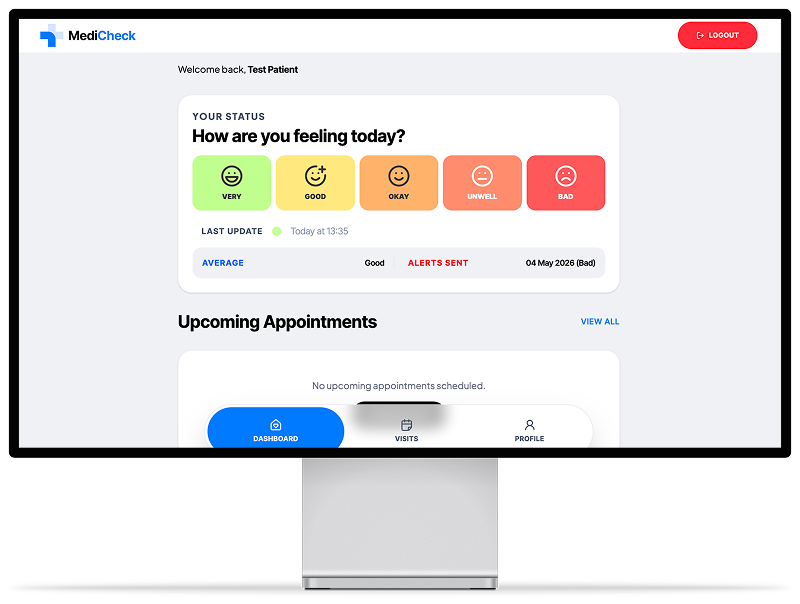
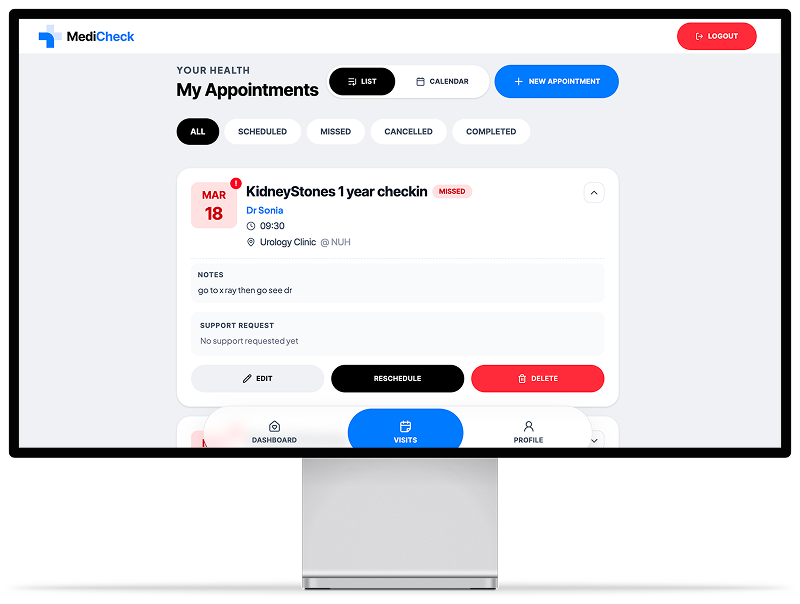
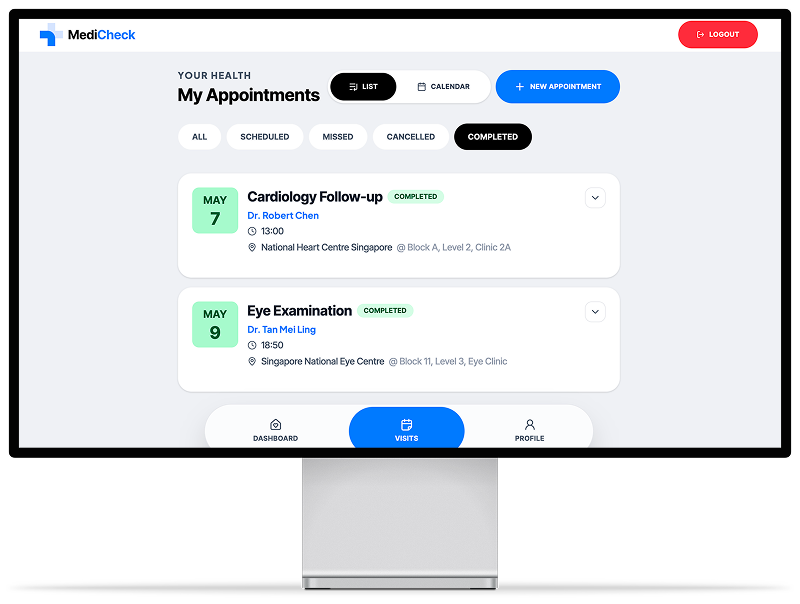
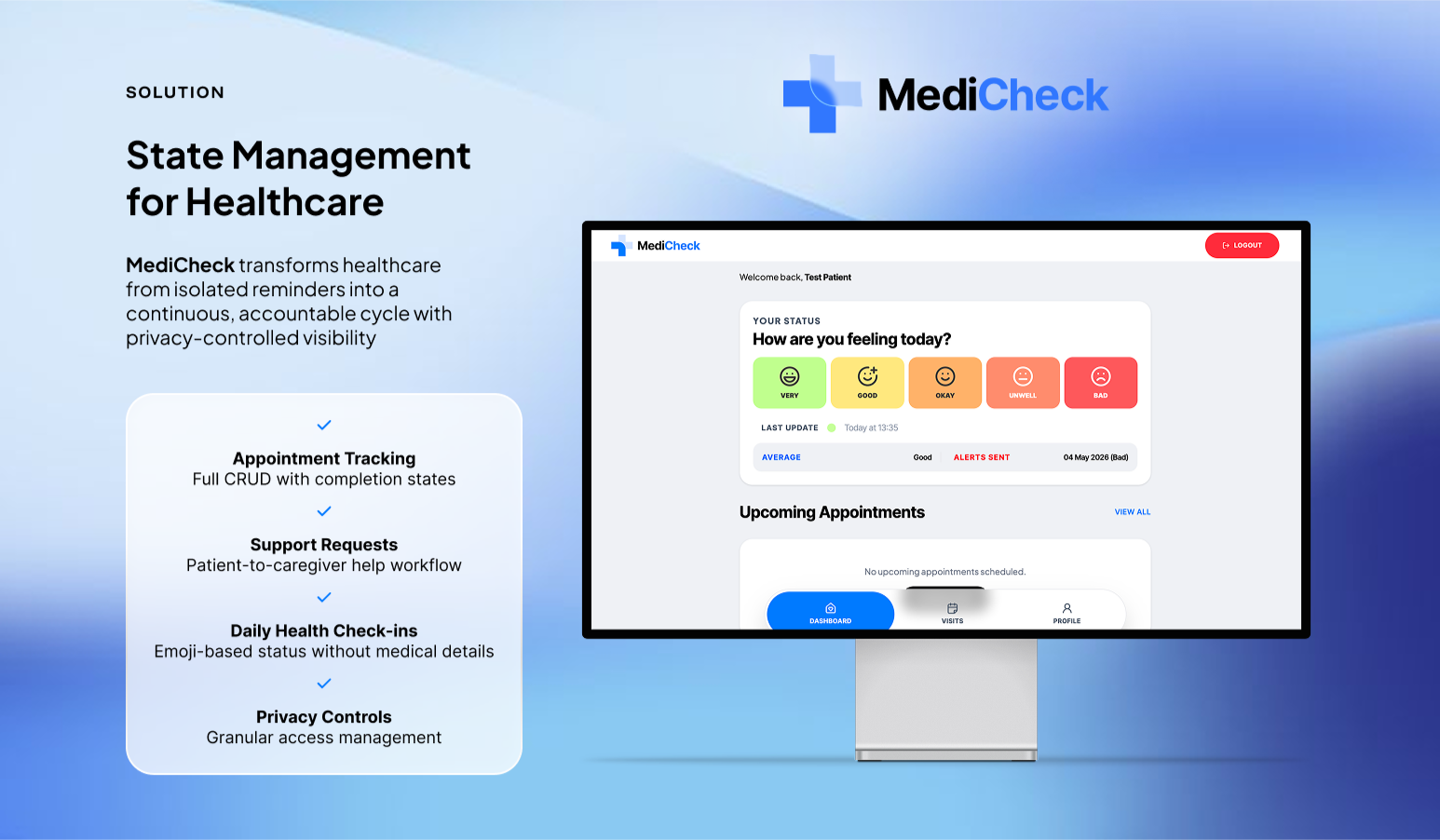
To address the delicate dynamics of caregiving, the system was engineered with two distinct, interacting interfaces. For patients, the app operates as a minimalist command centre where they can log daily wellness, track medical schedules, and dynamically request assistance for specific clinic visits. For caregivers, it surfaces an aggregate dashboard displaying active schedules, pending tasks, and immediate health alerts. By creating a specialised "many-to-many" digital linking system, patients maintain absolute control—allowing them to effortlessly grant or completely revoke access to their network at the tap of a button.
The Development & Process
Transitioning from product concepts to a living, database-driven application required strict structural discipline across both the backend engine and user interface. Key engineering milestones focused on long-term scalability and code health:
The Single Source of Truth: To ensure absolute data integrity, a digital "contract" system was integrated into the application using schema validation. This architecture explicitly guarantees that if incoming information doesn't look precisely right, it is blocked immediately. By sharing these identical rules across the server and the user interface, data drift is completely eliminated.
Future-Proof Interface Design: Anticipating the complex forms required for healthcare systems, specialized reusable user-interface frameworks were engineered. By baking validation feedback and error-handling directly into these foundational UI elements, styling can be updated globally across dozens of screens instantly, drastically reducing future development overhead.
Architectural Refactoring: Realizing early code structures were becoming cluttered, the system's security and authentication logic were cleanly separated. Routing paths were isolated from core logical functions to keep the architecture perfectly matching professional enterprise standards.
Database Schema Evolution: Encountering rigid structural limitations when transitioning database tables from basic text formats to highly secure, fixed user roles, systemic updates were executed to safely reset and re-sync database tables, providing a masterclass in proper data preparation.
Accessibility & Quality Assurance
A digital health tool must remain bulletproof under real-world usage constraints. The quality assurance cycle optimized for ultra-low interaction costs while resolving multi-layered execution bugs:
The Medical Feelings Logger: Designed specifically for elderly or exhausted users, a 5-state icon-based wellness tracker was built. It requires zero typing; a single tap logs a status, provides instantaneous visual feedback, and resets.
Universal Accessibility Standards: Icon scales and interactive touch targets were significantly amplified to accommodate users with reduced physical precision. Furthermore, explicit contextual coding labels were embedded across every button, ensuring screen-reading software clearly translates visual emojis into accessible spoken instructions for visually impaired individuals.
The Stale Timestamp Fix: Testing revealed that manually updating a user's health status failed to refresh the internal database modification clocks. To preserve data accuracy, the engine was reprogrammed to instantly wipe the old entry and generate a fresh record, securing an immutable "one log per day" standard.
The Cross-Border Timezone Bug: Because development occurred behind a network server located in Tokyo while the application target audience is based in Singapore, browser engines naturally distorted historical care logs. This was fixed by implementing rigid localized timezone rendering rules, ensuring care histories display uniformly regardless of client locations.
Simulating Realistic Environments: To stress-test interface performance effectively, rigid placeholder data was replaced with randomized timestamp simulations, ensuring application behaviors mirrored natural human schedules perfectly.